blog
  • 5 Questions to Ask Before Buying a Skid Steer Loader
    5 Questions to Ask Before Buying a Skid Steer Loader Aug 31, 2026
    Buying a skid steer loader involves more than simply comparing engine horsepower, rated operating capacity, or price. Even when two skid steer loaders have similar specifications, their actual performance can vary significantly depending on the application. The right machine depends on what materials you need to handle, which attachments you plan to use, how much space is available on the jobsite, what type of ground the machine will operate on, and how easy it will be to obtain maintenance support and spare parts after purchase. For construction contractors, equipment dealers, rental companies, farms, and industrial users, choosing the wrong skid steer loader configuration can result in lower productivity, attachment compatibility problems, transportation difficulties, higher operating costs, or paying extra for capabilities that are rarely used. Before comparing skid steer loader models, start by answering these five important questions.   1. What Will the Skid Steer Loader Mainly Be Used For?   Choosing the right skid steer loader should begin with the actual application rather than the specification sheet. A skid steer loader primarily used for bucket loading will have different configuration requirements from a machine that regularly operates augers, hydraulic breakers, trenchers, brush cutters, or other hydraulic attachments. Before purchasing, identify the tasks the machine will perform most frequently. You should also determine which application will place the highest load on the machine or require the greatest performance.   For example: ·If the skid steer loader frequently handles palletized materials, rated operating capacity and lift height may be more important than maximum travel speed. ·If hydraulic attachments will be used regularly, auxiliary hydraulic flow and pressure should be key considerations. ·If the machine will operate mainly inside warehouses, agricultural buildings, or confined construction areas, overall dimensions and maneuverability may provide more practical value than additional engine horsepower.   Before selecting a model, consider several basic questions: What materials will the machine handle? How high do they need to be lifted? Which attachments will be used? And in what type of environment will the skid steer loader normally operate?   Once these application requirements are clear, it becomes much easier to determine the specifications that actually matter.   2. How Much Rated Operating Capacity Do You Really Need?   Rated Operating Capacity (ROC) is one of the most important specifications when choosing a skid steer loader. It refers to the load the machine is rated to handle under the conditions specified by the manufacturer. However, buyers should understand that rated operating capacity is not the same as tipping load, operating weight, or breakout force. A common mistake is selecting a skid steer loader based only on the average weight of the material being handled while ignoring the heaviest loads encountered during normal operation. For example, if the machine uses pallet forks to move construction materials, you need to consider not only the weight of the load but also the weight of the pallet forks themselves. Attachments consume part of the machine's available lifting capacity, so the ROC should not be treated as the exact amount of material the machine can carry in every operating condition.   When comparing skid steer loader models, evaluate rated operating capacity together with: ·Tipping load ·Attachment weight ·Machine operating weight ·Required lift height ·Forward reach at the working position   A higher ROC is not always better. If the machine is significantly larger than the application requires, the purchase price, fuel consumption, tire costs, and transportation requirements may all increase. A larger machine may also be less maneuverable in confined spaces. On the other hand, selecting a skid steer loader with insufficient capacity can reduce the amount of material moved per cycle, increase the number of work cycles, and limit the attachments that can be used in the future. The better approach is to select a machine that can reliably handle your normal high-frequency loads while leaving reasonable capacity for common attachments and future changes in operating requirements.     3. How Much Engine Power Does a Skid Steer Loader Need?   Engine horsepower is easy to compare, which is why many buyers focus on it first when evaluating a skid steer loader. However, more horsepower does not automatically mean higher productivity. The engine must work effectively with the hydraulic system, drivetrain, machine weight, tires, and attachments. If the rest of the machine cannot make effective use of additional engine output, simply increasing horsepower may provide limited practical benefits. For example, a skid steer loader used mainly with a bucket or pallet forks for general material handling has very different power requirements from a machine that frequently performs hydraulic-intensive applications such as breaking, trenching, or milling.   When evaluating skid steer loader engine power, consider: ·Material type ·Digging intensity ·Ground conditions ·Hydraulic attachment requirements ·Daily operating hours ·Fuel consumption and operating cost   Instead of simply asking, “How much horsepower does this skid steer loader have?”, a more useful question is: Can the engine provide enough power for the traction and hydraulic demands of my actual application? This approach makes it easier to determine whether the engine is properly matched to the job rather than simply comparing horsepower figures.   4. Can the Skid Steer Loader Work Efficiently in Your Jobsite?   A larger skid steer loader does not necessarily deliver higher productivity. One of the main reasons businesses choose skid steer loaders is their ability to operate in confined spaces where larger loaders may not work efficiently. For this reason, buyers should evaluate the physical limitations of the jobsite before focusing only on machine capacity. Start by checking the width and height of the narrowest entrance the machine will need to pass through. Then determine whether there will be enough space for the machine to turn and maneuver once it enters the working area. Attachments also affect overall machine dimensions. After installing a bucket, pallet forks, or another attachment, the skid steer loader may require additional operating space. This is particularly important when working in:   ·Warehouses ·Agricultural buildings ·Residential construction sites ·Material yards ·Other confined working areas   A machine must do more than simply fit through an entrance. It should also have enough room to turn, approach materials, load, unload, and complete its normal operating cycle efficiently. If a skid steer loader can barely enter the work area but has very limited maneuvering space once inside, its higher rated operating capacity may not translate into greater real-world productivity.   5. Are the Tires and Machine Type Suitable for Your Ground Conditions?   Ground conditions directly affect skid steer loader traction, tire wear, maneuverability, productivity, and overall operating costs. Before choosing a machine, consider two fundamental questions: Will the loader mainly operate on hard surfaces or soft ground? And: Is tire wear resistance or traction more important for your application? If the machine operates primarily on concrete, asphalt, or other hard surfaces, tire wear and maneuverability will usually be major considerations. If the skid steer loader frequently works on muddy, soft, or loose ground, traction and flotation may become more important. In these applications, buyers should consider not only different tire options but also whether a compact track loader would be better suited to the working conditions.   Skid Steer Loader vs. Compact Track Loader   A compact track loader is not automatically better than a wheeled skid steer loader. Track loaders generally provide better traction and flotation on soft ground, but their undercarriage systems also introduce different maintenance requirements and operating costs. The decision between a wheeled skid steer loader and a compact track loader should therefore be based on factors such as:   ·Typical ground conditions ·Machine utilization ·Transportation requirements ·Tire replacement costs ·Undercarriage maintenance costs ·Required traction and mobility   Choosing the wrong undercarriage type can increase operating costs through excessive tire wear, frequent slipping, or higher undercarriage expenses—even when the engine, hydraulic system, and lifting capacity are otherwise suitable for the application.   Find the Right LTMG Skid Steer Loader for Your Application   If you are looking for a skid steer loader for construction, agriculture, material handling, landscaping, or other applications, you can explore the LTMG skid steer loader range and select a machine based on your required operating capacity, attachments, hydraulic configuration, working environment, and transportation conditions. If you are unsure which model is right for your application, you can provide LTMG with details about your actual working conditions and operational requirements. For equipment dealers, rental companies, and buyers with specific market requirements, LTMG also provides OEM and ODM skid steer loader solutions. Machine configurations and customization options can be discussed according to different projects and target markets. The more information you provide about your working conditions and purchasing requirements, the easier it is for our team to recommend a more suitable skid steer loader configuration and equipment solution.    
  • Crawler vs Wheel Skid Steer Loaders: Choosing the Right Machine for the Job?
    Crawler vs Wheel Skid Steer Loaders: Choosing the Right Machine for the Job? May 29, 2026
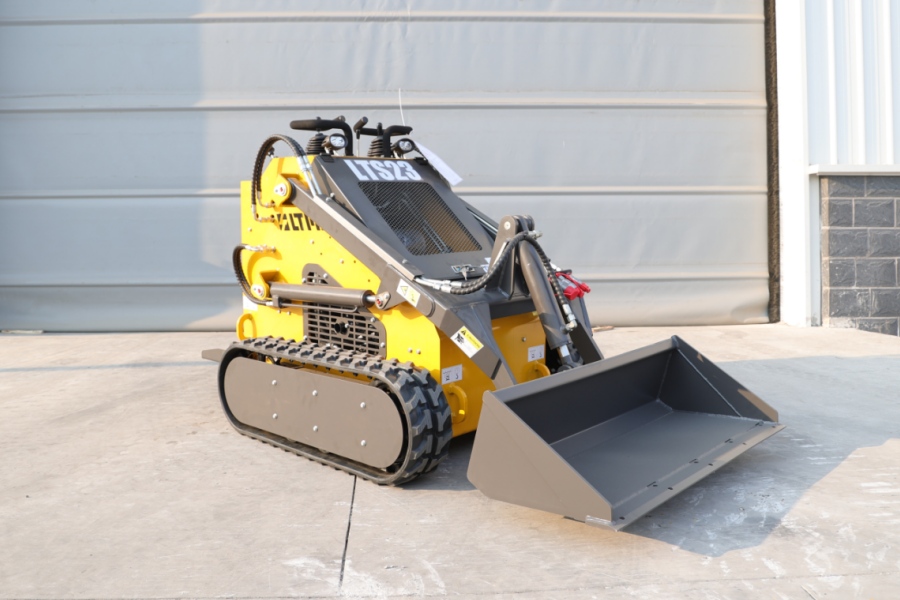
    A skid steer loader is a versatile and highly efficient compact construction machine widely used in road maintenance, ports, factories, municipal construction, livestock farming, and many other applications. In practical use, different working conditions not only affect machine selection, but also directly determine the matching of operating capacity and performance. Choosing the right model is essential for improving efficiency and reducing operating costs. LTMG can provide skid steer loader selection guidance and practical application solutions based on different jobsite requirements, helping customers quickly match the right equipment for their projects. Crawler vs Wheel Skid Steer Loader Comparison Skid steer loaders are mainly divided into wheel skid steer loaders and crawler skid steer loaders according to their drive systems. In actual machine selection, neither type is absolutely better than the other. The key difference lies in their adaptability to ground conditions and workload intensity. Wheel Skid Steer Loader Strong adaptability and flexible operation Ideal for paved roads, workshops, warehouses, ports, and hardened surfaces Higher travel speed and working efficiency on flat ground Crawler Skid Steer Loader Strong traction and higher stability Suitable for muddy ground, wetlands, beaches, forests, lawns, and soft terrain Better flotation and reduced ground pressure In simple terms: The more complex the terrain and the heavier the workload → choose a crawler skid steer loader The flatter the ground and the higher the efficiency requirement → choose a wheel skid steer loader Key Features of Skid Steer Loaders Thanks to their compact structure and multifunctional design, skid steer loaders can easily adapt to a wide range of complex working environments. Compact and Flexible Design The compact machine size allows operation in narrow or confined spaces. 360° Zero-Turn Steering Extremely small turning radius provides excellent maneuverability and jobsite flexibility. Strong Multi-Application Capability Supports quick replacement of different skid steer loader attachments directly on site. Easy Operation Intuitive control system with a short learning curve, allowing operators to quickly become familiar with the machine. Stable Working Efficiency Maintains high efficiency even when switching between multiple tasks or working in tight spaces.   Skid Steer Loader Selection Recommendations for Different Applications In real-world applications, skid steer loader selection is not only about machine specifications, but also about matching working conditions, workload intensity, and ground environments. Below are several typical application scenarios with recommended machine solutions. Light-Duty Compact Work Applications (Urban / Landscaping / Indoor / Light Material Handling) Typical Working Conditions Limited working space such as urban areas, indoor projects, and gardens Mostly paved surfaces Mainly used for material handling, loading, and landscaping Frequent operation cycles with relatively light loads Core Requirements Flexibility Maneuverability Operating efficiency Recommended Model: LTMG LT65 Skid Steer Loader This wheel skid steer loader has a rated load capacity of 950 kg. With flexible steering and fast movement speed, it is suitable for rapid switching between high-frequency tasks in narrow working environments. Operating Weight: 3400 kg Bucket Capacity: 0.5 m³ Small Crawler Loader for Complex Terrain (Mud / Narrow Spaces / Light Construction) Typical Working Conditions Soft, muddy, or unstable ground Limited operating space Mainly used for light construction, material handling, and precision work Core Requirements Passability Stability Compact maneuverability Recommended Model: LTMG LTS23 Mini Track Loader This crawler skid steer loader has a rated load capacity of 300 kg. It features a low-drive track structure with a lower center of gravity, providing better stability on slopes. The simple structure also reduces maintenance costs. However, because the drive sprocket is positioned closer to the ground, mud and debris can accumulate more easily, making it more suitable for relatively cleaner working environments. Operating Weight: 950 kg Bucket Capacity: 0.1 m³ Heavy-Duty Continuous Operation Applications (Construction / Jobsite / Aggregate / Demolition) Typical Working Conditions Complex construction environments with mud, gravel, and uneven terrain Heavy loads and high-intensity operations Multiple applications such as breaking, milling, and loading Core Requirements Stability Load capacity Durability Recommended Model: LTMG LTS125 Track Skid Steer Loader This crawler skid steer loader has a rated load capacity of 1500 kg. It adopts a high-drive undercarriage design, which raises the drive sprocket away from mud and impact areas, significantly improving drivetrain durability. The machine offers stronger traction and better performance in harsh muddy working conditions. However, the structure is more complex, resulting in higher manufacturing and maintenance costs. Operating Weight: 4800 kg Bucket Capacity: 0.6 m³ Skid Steer Attachments: One Machine for Multiple Applications One of the biggest advantages of a skid steer loader is its powerful attachment compatibility. By quickly changing different attachments for skid steer loaders, one machine can handle loading, construction, cleaning, agricultural work, and many other applications, greatly improving equipment utilization and achieving true multi-functionality. Common Skid Steer Loader Attachments ① Material Handling Attachments (Most Common Applications) Suitable for daily loading and material handling operations: Buckets, Fork attachments, Combination buckets, Screening buckets, Bale spears, Manure forks, etc. Fork attachments Manure forks Bale spears ② Municipal & Road Construction Attachments Suitable for road maintenance, cleaning, and demolition work: Road sweepers, Sweepers, Cold planers, Trenchers, Snow blades, Snow blowers, Ice breakers, Drum ice breakers, Hydraulic breakers, etc. Road sweepers Drum ice breakers Hydraulic breakers ③ Construction Attachments Designed to improve construction versatility and support multiple job functions: Mixers, Backhoe arms, Dozer blades, Screening buckets, Mini excavator attachments, etc. Dozer blades Backhoe arms Screening buckets ④ Landscaping & Agricultural Attachments Suitable for farms, landscaping, and land preparation work: Tree spades, Grapple buckets, Mowers, Rotary tillers, Augers, Hedge trimmers, etc. Hedge trimmers Tree spades Grapple buckets Through different skid steer attachments combinations, a skid steer loader can perform not only basic loading and handling tasks, but also trenching, breaking, sweeping, snow removal, excavation, and mixing operations. This is one of the biggest advantages that skid steer loaders have over many other construction machines: one machine can replace multiple single-purpose machines, significantly reducing equipment investment costs. Conclusion Different working conditions require different skid steer loader solutions. Crawler skid steer loaders are more suitable for soft ground and heavy-duty operations, while wheel skid steer loaders offer higher efficiency on paved surfaces and during high-frequency material handling tasks. When selecting a machine, users should comprehensively consider: Working environment Load requirements Skid steer loader attachments Budget Only by matching the machine to the application can equipment value and operating efficiency be maximized. LTMG provides a wide range of skid steer loader configurations covering different capacities and application scenarios, helping customers quickly find the right equipment solution. Click to learn more.  
  • Construction Machinery Purchasing Guide: Choose the right equipment according to project requirements
    Construction Machinery Purchasing Guide: Choose the right equipment according to project requirements May 28, 2025
      Selecting the right heavy equipment is a high-stakes decision that impacts your project's timeline, safety, and bottom line. This Construction Machinery Purchasing Guide is designed to help project managers and fleet owners move beyond basic specs to find the perfect synergy between machine capability and job site reality.   1. Assessing Project Scope and Terrain Complexity Expertise in procurement starts with a deep understanding of the "dirt" and the "space." In our experience at LTMG, a machine that looks great on paper can fail if the environment isn't factored in. Spatial Constraints: For urban infrastructure or indoor demolition, look for Zero-Tail Swing excavators or compact skid steer loaders. These prevent accidental damage to existing structures in confined areas. Geological Demands: If you are working on soft, marshy ground, pay attention to Ground Bearing Pressure. Wide tracks (LGP - Low Ground Pressure) are essential. Conversely, for rocky terrain, prioritize machines with heavy-duty undercarriage protection and reinforced buckets. Altitude and Climate: High-altitude projects require engines with efficient turbochargers to compensate for thinner air, ensuring you don't lose horsepower when it matters most.     2. Evaluating Technical Specs and Machine Efficiency To demonstrate true expertise, you must look at the "muscles" of the machine—the hydraulic and powertrain systems. Hydraulic Flow and Pressure: Don't just look at engine HP. High-performance attachments (like breakers or mulchers) require specific auxiliary hydraulic flow rates (L/min). Ensure your machine can feed the tools you plan to use. Breakout Force & Lifting Capacity: Calculate your maximum expected load. We recommend a "safety buffer" of 15–20% above your heaviest lift to reduce mechanical stress and prolong the machine's lifespan. Engine Standards: For global projects, ensure compliance with local emissions standards (such as EPA Tier 4 Final or EU Stage V). This isn't just about the environment; it’s about legal compliance and future resale value.   3. Analyzing Total Cost of Ownership (TCO) Trust is built on transparency. A low sticker price often hides high long-term costs. A professional purchasing strategy must focus on the lifecycle of the asset. Fuel Efficiency Ratios: Fuel usually accounts for the largest chunk of operating costs. Look for machines with "Eco-modes" or auto-idle features that can reduce consumption by 10–15% during standby. Maintenance Accessibility: Time is money. Choose equipment where daily checkpoints (oil, filters, coolant) are accessible from ground level. This encourages operators to perform regular maintenance, preventing catastrophic failures. Predictive Resale Value: Brands like LTMG that maintain high parts availability and robust build quality tend to hold their value better in the secondary market, lowering your net cost when it's time to upgrade.     4. Selecting Reliable Suppliers and Global Support You aren't just buying a machine; you are entering a partnership with a manufacturer. Parts Availability & Logistics Network: A machine sitting idle is a major liability. Ensure your supplier has a robust global logistics chain and maintains a comprehensive inventory of critical wear parts to minimize downtime. Telematics and Remote Diagnostics: Modern fleet management relies on data. Ensure your equipment is equipped with GPS and remote monitoring systems to track fuel usage, location, and mechanical health in real-time. Certifications & Compliance: Always verify ISO, CE, and SGS certifications. These are the industry-standard benchmarks that prove the manufacturer adheres to international safety and quality protocols. Get a Professional Equipment Solution Today Navigating the complexities of heavy machinery procurement doesn't have to be a solo journey. At LTMG, we don't just sell loaders and excavators; we provide engineered solutions tailored to your specific project needs. Whether you are tackling a high-rise foundation, a remote mining operation, or a large-scale agricultural project, our team of experts is ready to help you optimize your fleet for maximum ROI.   Are you ready to find the perfect equipment for your next project? Contact LTMG today for a professional consultation and a customized machinery solution.   Email: market@ltmg.com WhatsApp: +86 19559207570    
  • How to extend the life of the loader?
    How to extend the life of the loader? May 21, 2025
    Loaders are indispensable assets in heavy-duty operations, but their service life and uptime are not guaranteed. They depend directly on proactive maintenance and proper operation. As a loader owner or fleet manager, your goal is to maximize the equipment's lifecycle value while minimizing its Total Cost of Ownership (TCO). This article moves beyond the simple checklist to explore key, high-impact strategies to keep your equipment running smoothly and profitably for the long term.     1. Regular inspection and lubrication Regular inspections are key to loader durability. Check key components such as the hydraulic system, joints, and chassis for wear or leaks. Use high-quality, original lubricants to reduce friction on pivot points and bearings. This simple habit can prevent premature wear and ensure smoother operation. Don't ignore small problems - a small hydraulic leak today can turn into an expensive repair tomorrow. 2. Optimize hydraulic system performance The hydraulic system is the heart of your loader. For example, you can install advanced filtration systems to capture particles that degrade performance. For older models, consider upgrading to a smart hydraulic pump that automatically adjusts pressure to ease the load during heavy loads. 3. Train operators for efficient use Even the most rugged machines are subject to operator abuse. Train your team to avoid sudden movements, overloading, and excessive idling. Emphasize correct bucket angles to minimize loads on the loader arms and hydraulic cylinders. Telematics systems can be deployed to monitor usage patterns to optimize operator behavior. 4. Protect Critical Components from Wear For loaders operating in dusty or corrosive environments, apply an anti-corrosion coating to the structural frame. The radiator and cooling system also need to be cleaned regularly to prevent overheating - a leading cause of engine failure.     Why Choose LTMG Loaders? LTMG loaders are meticulously engineered using cutting-edge materials and precision components, but what really makes them stand out is the LTMG advantage – a holistic approach that combines superior products with user-focused service designed to help you achieve these maintenance goals. Extending the life of your loader is about more than just repairs. It’s about working with a brand that puts your success first. Our designs prioritize service accessibility to simplify your daily inspections, and our robust hydraulic systems are built to resist the contamination discussed earlier. With LTMG, your loader will be more productive, last longer, and provide peace of mind at every stage of its lifecycle. Email: market@ltmg.com WhatsApp: +86 19559207570    
  • The versatility of loaders: an essential tool for modern engineering
    The versatility of loaders: an essential tool for modern engineering Mar 26, 2025
      In today’s fast-paced building and industrial worlds, effectiveness and adaptability are essential. That’s the place where the contemporary loader comes in – a versatile desktop that has developed a long way past regular earthmoving work. From city infrastructure initiatives to agricultural operations, loaders have end up a cornerstone of productivity, switching between more than one roles to meet the challenges and demands.     Multi-functional cross-industry proficiency Modern loaders are designed to do more than simply deal with material. Equipped with clever hydraulics and quick attachments, these machines without problems swap between buckets, grapples, and snowplows. On building sites, they simplify duties like clearing debris, grading, and lifting heavy loads. And in agriculture, loaders help with coping with feed, cleansing barns, and preparing land. Even logistics facilities rely on loaders for speedy pallet transport and warehouse organization. This adaptability minimizes downtime and maximizes your business’s ROI. Sustainability and operating comfort In addition to being capable of functioning in an extensive variety of tasks, modern-day loaders are designed to be extra gas efficient, thereby lowering running costs. Sustainability is an essential factor, particularly with the developing focus on environmental problems in the building industry. In addition, many loaders now additionally have superior security features and ergonomic designs that prioritize operator comfort, making sure an extra environment-friendly and safer working environment. Smooth operation in harsh environments Another necessary function of super loaders is the capability to function easily in difficult environments. Built to face up to the rigors of development sites, these machines have effective engines and hydraulic structures that ensure certain most appropriate performance even under heavy loads. Whether carrying gravel, sand, or development waste, these loaders' effective drivetrains ensure clean operation and quick turnaround, notably enhancing customers' running efficiency.     About LTMG For customers who want to enhance their operational efficiency with reliable and versatile equipment, our loaders offer an excellent solution designed to meet the demands of modern construction projects. But it’s not just the equipment itself that makes us stand out, it’s our commitment to service. We offers unparalleled after-sales support to ensure that customers’ machines remain in optimal condition throughout their lifecycle. In short, our loader is more than just a machine, it's a versatile tool that can change the way you do construction. From its ability to handle multiple tasks to its rugged, reliable performance, it's the perfect addition to any fleet. Combining great equipment with exceptional service makes us the ideal choice for construction professionals looking to maximize efficiency and minimize downtime.   ?Email: market@ltmg.com ?WhatsApp/Wechat: +86 19559207570    
  • LTMG Skid Steer Loaders with Attachments: Adapting to Every Challenge
    LTMG Skid Steer Loaders with Attachments: Adapting to Every Challenge Jul 28, 2023
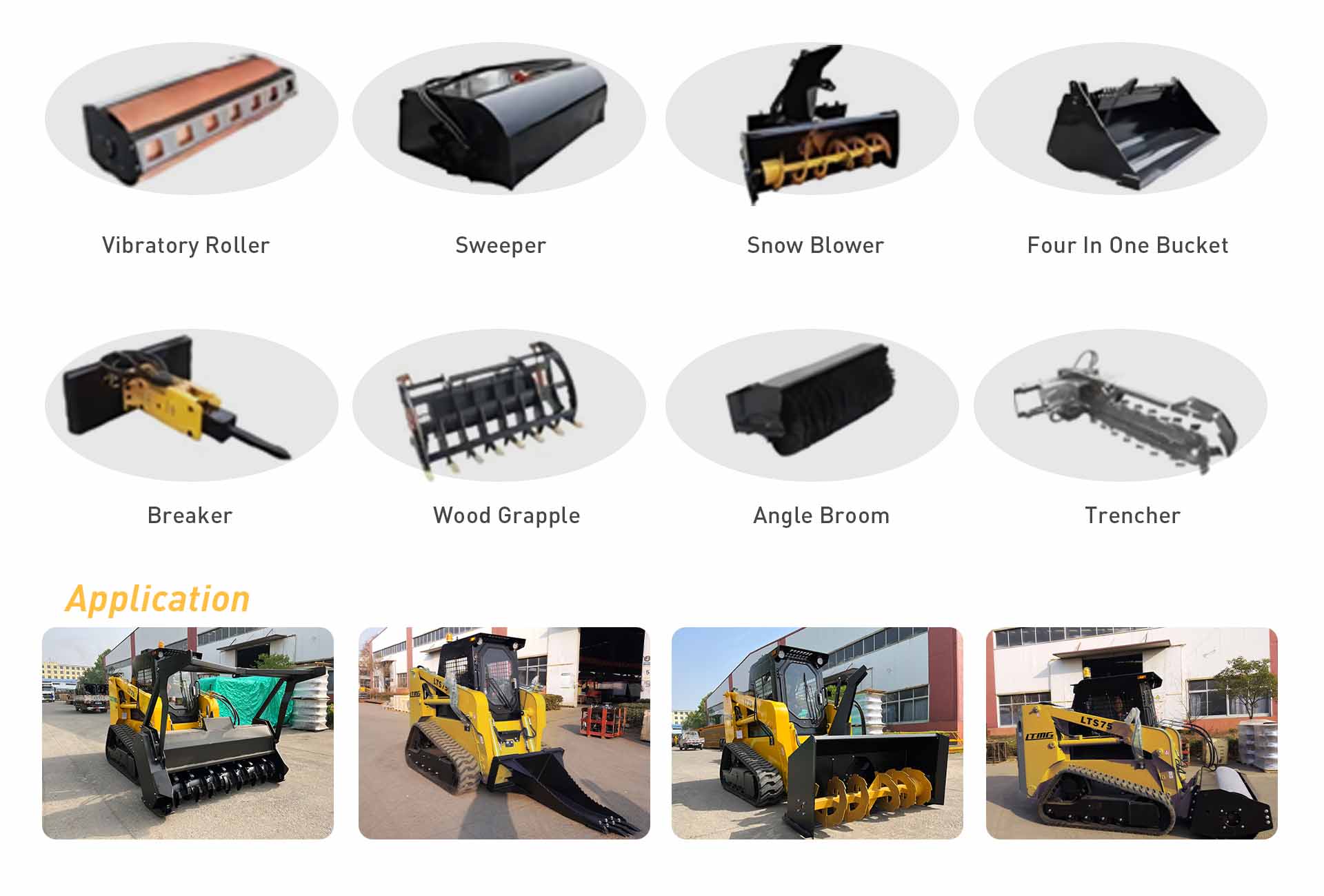
      LTMG's range of skid steer loaders makes tackling diverse tasks a breeze. With a wide selection of optional attachments, these machines can effortlessly handle various working conditions, eliminating the need for multiple specialized equipment. Operating LTMG skid steer loaders is a smooth experience, ensuring stability and high performance. Balancing flexibility, efficiency, reliability, and durability, these loaders are a trustworthy choice for any job.     Vibratory Roller Attachment: Perfecting Surface Finishes When mounted on the front of a skid steer loader, the vibratory roller attachment proves to be a game-changer. Equipped with a heavy drum featuring an eccentric weight system, it generates vibrations during operation, efficiently compacting and compressing materials. This results in a solid and even surface finish, making the vibratory roller an invaluable asset for various construction and paving projects.   Sweeper Attachment: Mastering Debris Removal The skid steer sweeper attachment, powered hydraulically, attaches to the front of the loader. Its rotating brushes effectively collect debris, channeling it into a hopper or collection bucket. Its high maneuverability allows it to access confined spaces and maneuver around obstacles with ease, making it an ideal tool for keeping streets, sidewalks, and work areas clean.   Snow Blower Attachment: Conquering Winter's Challenges Designed as a robust, hydraulically-driven snow clearing machine, the skid steer snow blower attachment mounts on the front of the loader. Its rotating auger efficiently scoops up snow and propels it into a chute, safely directing it away from the cleared area. With its capability to handle heavy snowfall and various snow conditions, the snow blower attachment proves essential for efficient winter snow removal.   Buckets: Ideal for Lifting and Scooping Buckets stand on par with forks in popularity, serving the same functions of lifting and moving materials. However, buckets are better suited for scooping materials like soil or rocks. Available in a wide range of options, from basic to specialized variants, buckets offer versatility and ease of use, making them a go-to attachment for various projects.   Augers: Powerful Hole Digging Augers serve a slightly more niche purpose, but their efficiency and power make them a popular attachment. Their long, thin shape with large teeth enables them to dig deep holes in soil while minimizing ground damage. The size of the auger depends on soil conditions and climate, offering a cost-effective solution for occasional deep hole digging.   Trenchers: Simplifying Trench Digging Trencher attachments are specifically designed for digging trenches, simplifying a challenging task that would otherwise require significant manual labor. Capable of handling tough, rocky soil, trenchers come in various sizes, allowing you to choose the attachment that matches the desired depth and width of the trench.   Breakers: Demolishing Hard Materials Breaker attachments excel at demolishing concrete or asphalt due to their ability to handle extremely hard materials. Powered by the skid steer's hydraulics, these attachments require a machine with sufficient hydraulic power. They are essential for construction and demolition projects involving sturdy materials.   Grapples: Handling Large and Heavy Debris For moving large and heavy objects like boulders or logs, grapple attachments provide a distinct advantage over regular buckets. Equipped with two grapple arms, they securely hold onto the debris, making them an excellent addition to any equipment fleet.   With LTMG's comprehensive range of skid steer loaders and compatible attachments, finding the right machine for your specific needs becomes hassle-free. Whether it's construction, landscaping, snow removal, or any other task, LTMG skid steer loaders deliver adaptability, efficiency, and reliable performance, ensuring a successful outcome for every challenge.
  • How to Choose: Mini Excavator vs. Skid Steer
    How to Choose: Mini Excavator vs. Skid Steer Nov 24, 2023
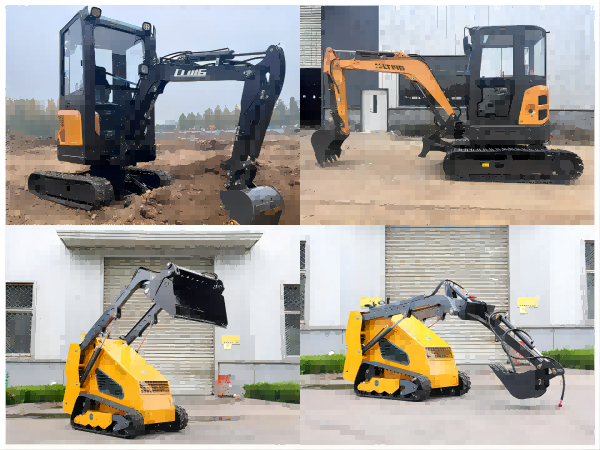
      If you are in the market for heavy machinery, then you have probably come across mini excavators and skid steers. Both are popular choices for small to medium-sized construction and landscaping projects but choosing between them can be overwhelming if you're new to the industry. In this post, the LTMG team will discuss the features of a mini excavator and skid steer, their pros and cons, and help you determine which one is best for your work.    What are Mini Excavators? A mini excavator is a small, lightweight, and versatile construction machine that is ideal for digging, demolition, and landscaping work. It typically has hydraulic-powered tracks that allow it to maneuver through tight spaces and rough terrain and has a hydraulic arm attached to a bucket that can be used to scoop and move dirt or other materials.     Pros: - Can dig deep into the ground - Easy to maneuver in tight spaces or limited access areas - Lower impact on the environment due to its lighter weight. - Increased precision in digging and excavating due to its small size. - Hydraulic-powered attachments can be easily added for multiple tasks   Cons: - Less power and speed due to their smaller size. - Limited reach compared to larger construction equipment. - Additional costs may be incurred for accessories and attachments. - Maintenance costs may be higher due to their specialized parts and smaller size.   What is a Skid Steer? A Skid steer is also a compact machine, but they are designed more for versatility. It can tackle a variety of jobs including digging, grading, and material handling. They are designed to operate on wheels and have a small turning radius, making them ideal for projects that require tight maneuvering. Their versatility comes from their ability to switch out attachments quickly and easily, making them a popular choice for many different types of projects.     Pros: - Lower initial cost compared to excavators - Can easily change between a wide range of attachments - Great for smaller, less intensive projects - Compact size allows for easy transportation between job sites. - Easy to operate and maneuver due to its four-wheel drive design.   Cons: - Limited vertical reach - Not ideal for deep-digging jobs - Can struggle on soft or rough terrain   Which One Should You Choose? - Type of project: If you have large excavation or demolition work, then a mini excavator would be more suitable. Skid steers work great for smaller jobs such as grading and general landscaping work. - Terrain: If your project requires working on rough or unstable terrain, then a mini excavator would be more stable and versatile. Skid steers are ideal for flat terrain that is easy to navigate. - Budget: Mini excavators are more expensive than skid steers, so if you are on a budget, a skid steer may be a better option. In conclusion, choosing between a mini excavator and a skid steer will ultimately depend on your specific project needs. If you require a machine for precise digging and landscaping work, the mini excavator may be the right choice. But if you need a versatile machine that can perform multiple tasks, the skid steer is a better option. Consulting with a construction equipment professional can help determine which machine is best suited for your job.   LTMG has a diverse inventory of both mini excavator and skid steer and their attachments to fit your operation’s exact needs. Any questions or interests, our professionals are here to help guide you to the best solution that benefits your bottom line and stays within your budget. Request more information please feel free to contact us at Email: market@ltmg.cn or  at Phone number +86 185 5975 7904 for additional support.

leave message

leave a message
If you are interested in our products and want to know more details,please leave a message here,we will reply you as soon as we can.
Submit
see more

Service Hours

LTMG offers a 24-hour online response service

Please contact us if you need any help

We will reply ASAP

Contact us #
+86 195 5920 7570

home

products

whatsApp

Contact