With urban construction becoming more efficient and refined, modern equipment is expected to deliver more than basic digging—it must also ensure road protection, operational efficiency, and flexible mobility. As a result, the wheeled excavator has become an important choice for urban and flat-ground construction projects.
A wheel excavator (or excavator with wheels) is a rubber-tired excavating machine that combines digging capability with fast self-propelled movement over short distances.
Its key advantages include:
In contrast, crawler excavators are better suited for complex terrain such as mud, soft soil, and mining environments where stability and traction are more important.
In simple terms:
This article uses typical LTMG models (7 Ton, 15 Ton, 21Ton ) from LTMG as examples to analyze real-world application logic and selection strategy.
Efficiency Advantages of Wheeled Excavators
The value of a wheeled excavator is not just “being able to drive on roads,” but its ability to significantly improve overall construction efficiency in specific working environments.
Urban Road and Municipal Engineering Applications
1. Road Maintenance and Reconstruction
In urban highways, secondary roads, and residential streets, surface protection is critical. A wheel excavator uses rubber tires instead of tracks, reducing damage to asphalt and concrete surfaces.
In traffic-sensitive environments, it can quickly move in and out of the work zone, minimizing disruption to road users.
2. Utility and Emergency Repairs
For underground pipelines such as drainage, power cables, and gas systems, work conditions often include:
A wheeled excavator for sale in municipal fleets is highly valued because it can travel directly between job sites without additional transport equipment, greatly improving emergency response speed.
3. Landscaping and Park Projects
In parks, plazas, and pedestrian zones, surface protection is essential.
The excavator with wheels can perform digging and loading operations without damaging finished landscaping structures such as stone paving or brick surfaces, while maintaining high maneuverability.
Construction Sites and Flat Terrain Applications
1. Multi-Point Construction Sites
In urban renewal or small infrastructure projects, machines often need to move frequently between multiple locations.
A wheeled mini excavator or medium wheeled excavator can move directly within the site without trailers, improving equipment utilization.
2. Industrial and Hardened Surfaces
In industrial parks, warehouses, and prefabrication yards, ground surfaces are typically concrete or hardened soil.
A tire excavator (wheeled type) performs well in such conditions with:
3. Light to Medium Earthmoving Work
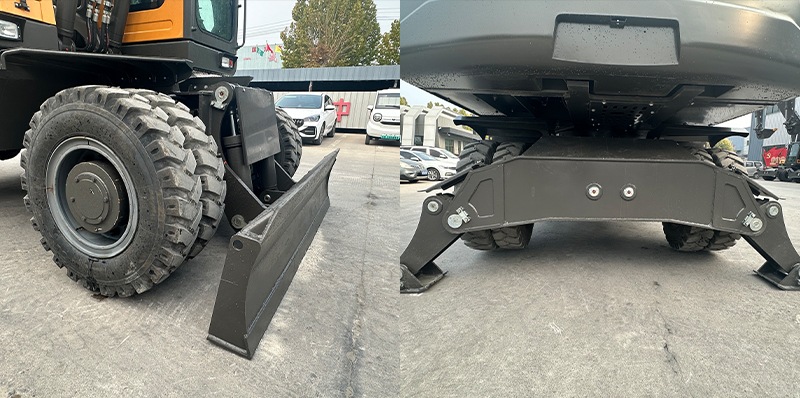
On compacted or dry ground, wheeled excavators can handle trenching, loading, and basic excavation tasks efficiently. With stabilizer legs properly deployed, they can maintain sufficient working stability for most urban applications.
LTMG Wheeled Excavator Model Selection Guide
LTMG offers a range of wheeled excavators designed for different jobsite requirements, from compact municipal work to heavy-duty industrial applications.
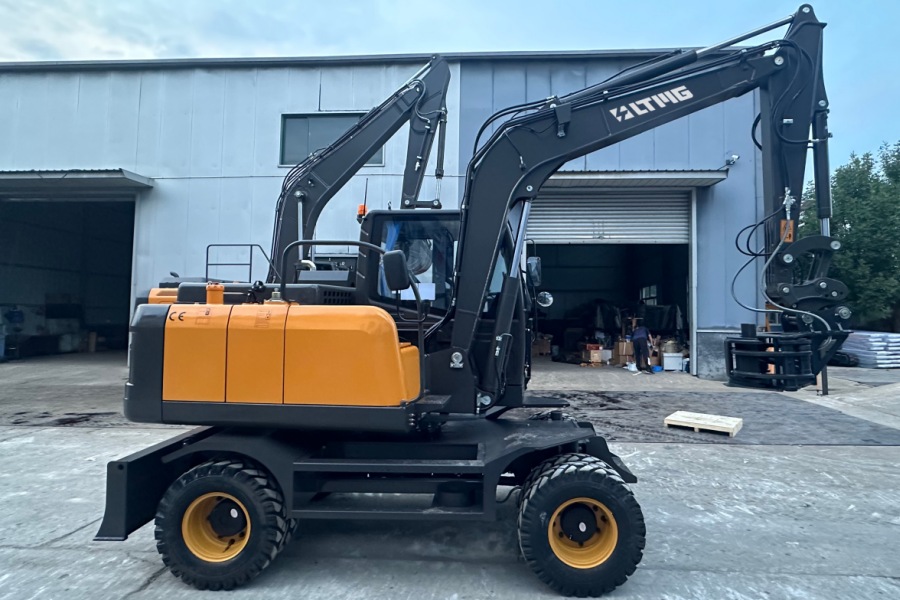
7 Ton Compact Wheeled Excavator (Urban Flexibility)
Designed for narrow streets and confined spaces, the 7 ton wheeled excavator focuses on mobility and compact structure. It is ideal for community maintenance, landscaping, and small municipal projects.
Example: LTMG 7 Ton Wheel Excavator
|
Performance Parameters |
LTMG 7 Ton Wheel Excavator |
|
Operating Weight |
7,000 kg |
|
Bucket Capacity |
0.21 m³ |
|
Max. Digging Depth |
3820 mm |
|
Rated Power |
62.5kw/ 2200rpm |
|
Traveling Speed |
0-28 km/h |
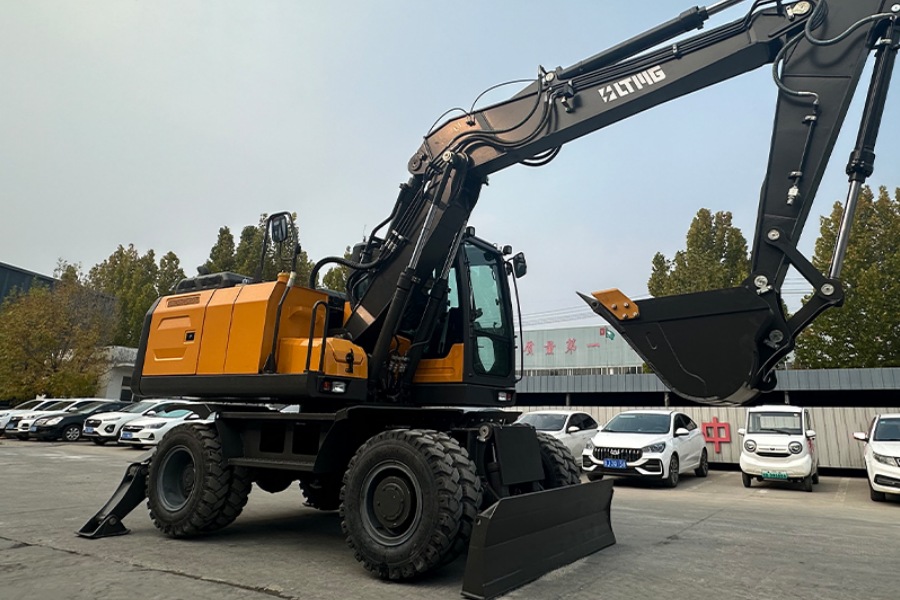
The 15 ton wheel excavator offers a balance between digging power and mobility. It is widely used in municipal works, industrial sites, and medium-scale earthmoving tasks.
Example: LTMG 15 Ton Wheel Excavator
|
Performance Parameters |
LTMG 15 Ton Wheel Excavator |
|
Operating Weight |
15000 kg |
|
Bucket Capacity |
0.6 m³ |
|
Max. Digging Depth |
5180 mm |
|
Rated Power |
110KW/2000RPM |
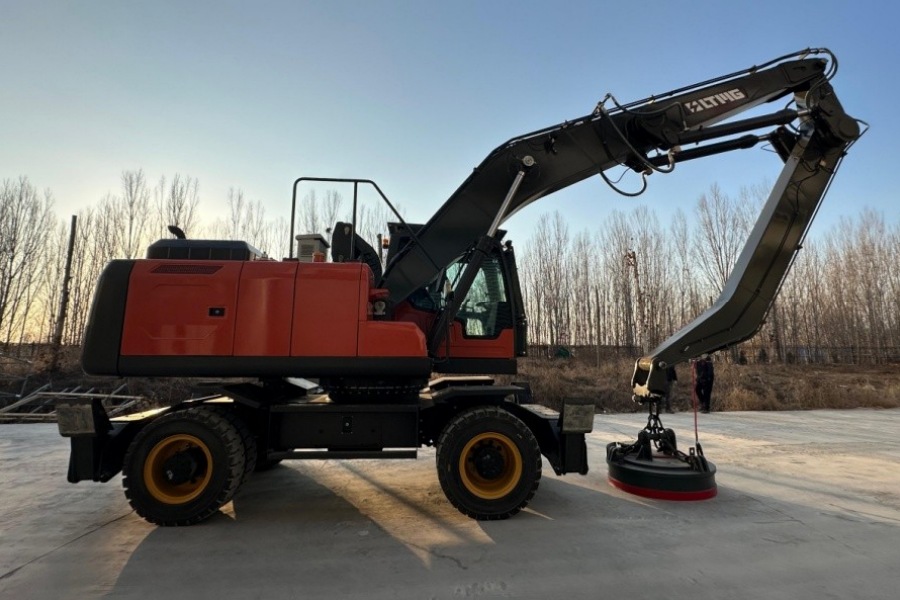
The 21ton wheeled excavator is designed for heavy-duty material handling and large-scale flat construction projects.
It performs especially well in:
Example: LTMG 21 Ton Wheel Excavator
In urban and flat-ground working environments, the safe operation and proper maintenance of a wheeled excavator can effectively ensure operational stability and extend the machine’s service life.
Because wheeled excavators frequently travel between job sites on paved roads, issues with the tires, braking system, or steering system may increase the risk of minor collisions or road surface damage. Therefore, special attention should be paid to the following:
Keeping the travel system in good condition is essential not only for equipment safety but also for minimizing the impact of construction activities on public roads and surrounding traffic.
Unlike crawler excavators, wheeled excavators do not naturally provide the same level of stability, and their center of gravity can shift more easily during operation. Before performing digging, material handling, or lifting tasks, operators should take the following precautions:
When working in confined spaces or on paved surfaces, these practices are essential not only for safe operation but also for maintaining high levels of accuracy and productivity.
Due to the high mobility of wheeled excavators, critical components generally require more frequent maintenance than traditional equipment. Particular attention should be paid to the following systems:
Preventive inspections of these key components can effectively reduce unexpected downtime and ensure continuous jobsite productivity.
To ensure long-term stable operation of the equipment, it is recommended to establish a basic maintenance schedule:
Proper maintenance significantly increases machine uptime and return on investment.
Equipment selection should shift from pure power thinking to scenario-based matching. In environments such as urban construction and hard-surface projects with frequent relocation needs, the wheeled excavator is a strategic choice for improving efficiency and flexibility.
Whether you are looking for a wheel excavator, wheeled mini excavator, or wheeled excavator for sale, selecting the right tonnage based on your project scale is key to maximizing productivity.
For more machine details, visit the product page of LTMG or contact the team for tailored solutions.

An excavator with wheels is commonly called a wheeled excavator or wheel excavator. Unlike crawler excavators, it uses rubber tires, allowing faster travel and greater mobility on paved roads and urban job sites.
The two main types of excavators are:
A wheeled excavator has lower off-road capability and stability than a crawler excavator. On soft or uneven ground, it may require outriggers for safe operation.
A wheeled excavator is commonly used for road construction, municipal projects, utility installation, landscaping, and other urban applications where mobility and fast jobsite transfers are important.
Choose a wheeled mini excavator (3–8 tons) for small jobs, an 8–15 ton wheel excavator for general construction, and a wheel excavator of 15 tons and above for large-scale earthmoving and material handling projects.
Tel : +86 195 5920 7570
Email : market@ltmg.com
Whatsapp : +86 195 5920 7570
Add : LTMG Group, Electronics City(Xiamen) International Innovation Center, No.23, Duiying Road, Jimei District, Xiamen, China


Get the latest Product Information & Offer Information



