In modern construction and industrial logistics, the demand for equipment that balances power with a small footprint has never been higher. For fleet managers and procurement professionals, the compact wheel loader has transitioned from a niche tool to a cornerstone of operational efficiency.
This guide explores the technical advantages and multi-sector applications of compact wheel loaders, providing the insights needed to make an informed investment for your business.
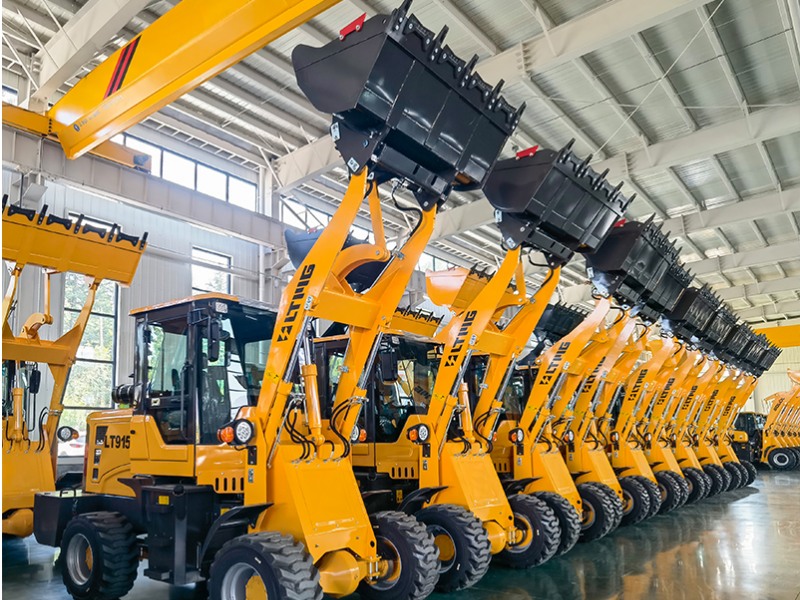
What Defines a Professional-Grade Compact Wheel Loader?
A compact wheel loader is not merely a smaller version of its heavy-duty counterparts. It is a purpose-built machine typically ranging from 3,000kg to 8,000kg in operating weight.
The defining engineering feature is the articulated steering system. Unlike rigid-frame machinery, the compact wheel loader’s chassis pivots, allowing the rear wheels to follow the exact path of the front wheels. This reduces tire wear and provides a tighter turning radius—critical for navigating congested jobsites or narrow warehouse aisles.
Core Advantages: Why Compact Wheel Loaders are a High-ROI Investment
1. Superior Maneuverability and Site Accessibility
The articulated design allows for precision movement in confined spaces where traditional loaders fail. This makes them the preferred choice for urban infrastructure projects and indoor industrial applications.
2. Multi-Functional Attachment Integration
A primary driver for compact wheel loader procurement is its "Swiss Army Knife" capability. Utilizing high-flow hydraulic systems and quick-coupler technology, a single unit can be equipped with:
3. Optimized Operational Efficiency
Despite their size, modern compact wheel loaders boast impressive breakout forces and lift capacities. They offer faster travel speeds than skid steers, significantly reducing cycle times when transporting materials across larger sites.
4. Operator-Centric Engineering
From an Expertise standpoint, operator comfort directly impacts productivity. Premium compact loaders feature pressurized cabs with 360-degree visibility, ergonomic joystick controls, and advanced HVAC systems, reducing fatigue during extended shifts.
5. Lower Total Cost of Ownership (TCO)
For businesses focused on the bottom line, CWLs offer excellent fuel economy and simplified maintenance access. The reduced tire scrubbing (inherent in articulated steering) translates to lower long-term overhead compared to skid steer loaders.
Industrial Applications: Where Performance Meets Demand
From residential backfilling to small-scale commercial development, CWLs provide the lifting power required without the logistical burden of transporting heavy-duty machinery.
In the agricultural sector, these loaders are indispensable for handling feed, managing manure, and performing barn maintenance, where low-profile designs are necessary to clear overhead obstacles.
Municipalities utilize compact loaders for year-round tasks, including snow removal, road repair, and public park maintenance, benefiting from the machine's ability to travel on sensitive surfaces without causing damage.
Procurement Strategy: How to Choose the Right Supplier
When evaluating wheel loader suppliers and models, consider these critical technical specifications:
Compact Wheel Loaders vs. Skid Steer Loaders: Which is Better?
While both are "compact," the choice depends on your specific use case:
Conclusion
Choosing the right equipment is a critical business decision. Whether you are looking for a wholesale partner, a customized OEM solution, or simply the most reliable compact wheel loader for your specific application, our team of technical experts is here to assist.
?Email: market@ltmg.com
?WhatsApp/Wechat: +86 19559207570

Tel : +86 195 5920 7570
Email : market@ltmg.com
Whatsapp : +86 195 5920 7570
Add : LTMG Group, Electronics City(Xiamen) International Innovation Center, No.23, Duiying Road, Jimei District, Xiamen, China


Get the latest Product Information & Offer Information



