The Ultimate Guide to Cost-Effective Skid Steer Loaders for Small Businesses: Maximizing ROI from Purchase to Maintenance
Nov 21, 2025
I. Introduction: Why Small Businesses Need a "Force Multiplier"
In today’s cutthroat market, efficiency isn't just a buzzword—it's survival. For general contractors, farmers, landscapers, and warehouse managers, the profit margin lies in doing more work with limited manpower.
The Core Value: Not Just a Machine, But a Productivity Booster
A Skid Steer Loader is more than just hardware; it’s a strategic asset that delivers three key competitive advantages to small enterprises:
1. Unmatched Agility: With its zero-turn radius capability, it maneuvers effortlessly through narrow alleyways, crowded warehouses, or tight interior renovation sites where larger heavy equipment simply can't fit.
2. Versatility (The "Swiss Army Knife" Effect): Thanks to a wide range of attachments, one machine can instantly transform into an excavator, forklift, snow blower, or dozer, massively expanding your service offerings.
3. Slashing Labor Costs: A single skid steer loader with a skilled operator can often replicate the output of a 3-5 person manual labor crew—without taking breaks or calling in sick.
This guide goes beyond just finding "cheap" equipment. We focus on "High Cost-Performance." We will walk you through the entire lifecycle—from needs analysis and precision selection to low-cost maintenance—to help you make the smartest investment decision.
II. The Basics: Understanding Compact Loaders for Small Business
Before opening your wallet, let’s look under the hood to understand exactly what you are buying.
1. How does it work?
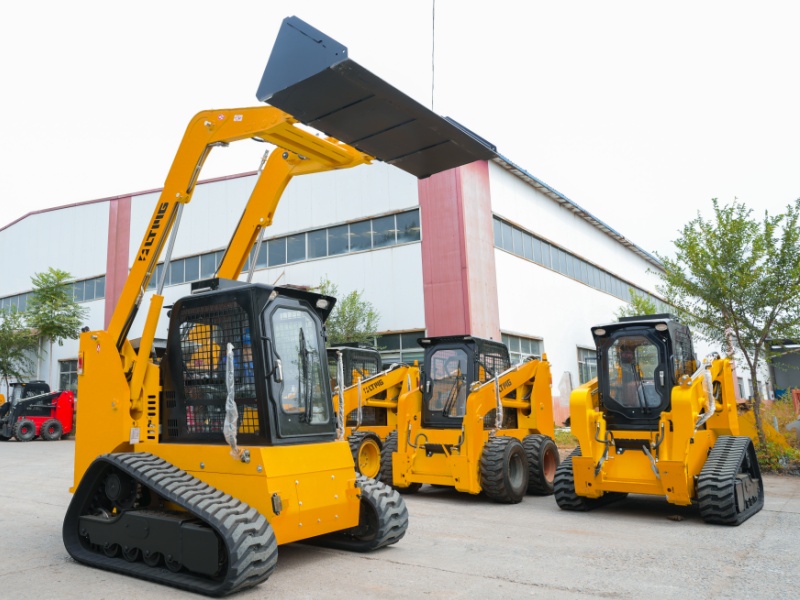
Simply put, a skid steer loader is a compact machine that steers by varying the speed and direction of the wheels (or tracks) on opposite sides.
In Plain English: It turns exactly like a tank. It can spin 360 degrees within its own footprint. For small businesses working in confined spaces—like backyard landscaping or interior demolition—this maneuverability is irreplaceable.
2. Which Type Fits Your Job Site?
The market is flooded with options, but small business owners should focus on these primary distinctions:
By Undercarriage (Movement):
Wheeled Skid Steer Loader: Faster travel speeds and ideal for hard surfaces like concrete, asphalt, or compacted dirt.
Value Proposition: Lower tire replacement costs and simpler maintenance compared to tracks.
Compact Track Loaders (CTL): Lower ground pressure, perfect for muddy, sandy, or sensitive turf conditions.
Note: While excellent for flotation, undercarriage maintenance is pricier. Unless your terrain demands it, wheels often offer a better ROI.
By Lift Path:
Radial Lift: The bucket moves in an arc. Offers superior breakout force and is structurally simpler.
Best for: Digging, grading, and pushing. Generally more budget-friendly.
Vertical Lift: The bucket rises straight up. Offers higher lift height and further reach at the top of the cycle.
Best for: Loading dump trucks and stacking pallets.
3. The Profile of a "High-Value" Machine
For a small business, the sweet spot for a cost-effective skid steer includes:
High Compatibility: Equipped with a standardized Universal Quick Attach plate, so you aren't locked into proprietary, expensive attachments.
Mechanical over Electronic: While digital displays are flashy, mechanical pilot controls are often more rugged, reliable, and cheaper to repair for small fleet owners.
Serviceability: A rear door and radiator that swing out easily to access filters and the engine, minimizing downtime during routine checks.
III. Smart Selection: Defining Your Actual Needs
The most expensive machine isn't the one with the high price tag; it’s the one that sits idle. Avoid buyer's remorse by auditing your needs first.
1. Lock Down Your Industry Scenario
Construction: Focus on durability and hydraulic flow for running hydraulic breakers. A rugged radial lift machine is often the workhorse here.
Agriculture/Livestock: Focus on terrain navigability (flotation) and suitability for mucking out barns. An enclosed cab with HVAC is crucial for operator comfort against dust and odors.
Landscaping/Municipal: You likely switch tools often (tree spades, sweepers). Ensure the machine has sufficient auxiliary hydraulic flow to power these hungry attachments.
2. Quantify Your Specs (Don't Guess)
Base your decision on data, not gut feeling:
Rated Operating Capacity (ROC): What is the heaviest material you handle? (e.g., If a pallet of pavers weighs 800kg, your machine's ROC must exceed 850kg).
Dump Height: How high are the sideboards of your dump truck or hopper? Ensure the hinge pin height clears the edge easily.
Dimensional Constraints: Measure the smallest gate or doorway on your typical job site. If the machine doesn't fit, its performance specs don't matter.
IV. Strategies for Cost-Effective Operation & Maintenance
Once the machine is on your lot, how do you keep running costs low?
1. Efficient Operation Saves Fuel
Stop the "Full Throttle" Habit: In many applications, 70-80% throttle provides ample hydraulic power. Running wide open only increases fuel consumption and noise without speeding up the job.
Gentle Turns: Aggressive, sharp counter-rotations are the #1 killer of tires and rubber tracks. Teach operators to use "Y-turns" or 3-point turns to extend undercarriage life.
2. "Maintenance is Cheaper than Repair."
Grease is Cheap, Steel is Expensive: Grease all pivot points daily. A tube of grease costs pennies; replacing worn-out pins and bushings costs hundreds. Do the math.
Check Air Filters Religiously: Construction sites are dusty. A clogged air filter forces the engine to work harder, which spikes fuel consumption. Clean them regularly to maintain peak engine efficiency.
Smart Parts Sourcing: Once the warranty period expires, consider high-quality aftermarket filters and lubricants from reputable brands. This can cut maintenance material costs by 50% without sacrificing protection.
3. The Magic of Attachments: One Machine, Many Jobs
The Combo Strategy: Purchase the host machine + a standard bucket. Then add a Pallet Fork (replacing forklifts) and a Sweeper (replacing manual cleaning crews).
Rent vs. Buy: For expensive, specialized attachments used only once or twice a year (like a cold planer or tree spade), renting is far more cost-effective than buying.
V. Future Trends: Is an Electric Skid Steer Worth It?
Diesel is still king, but the electric wave is coming. When does an Electric Skid Steer make sense for a small business?
Upfront Cost vs. Long-term TCO: Electric models currently cost 30-50% more upfront. However, energy costs are roughly 1/10th of diesel, and there are no oil changes, fuel filters, or complex engine repairs.
Niche Market Advantage: If your business bids on indoor projects, basement excavations, or jobs in noise-sensitive areas (hospitals, schools), an electric machine is a game-changer. It eliminates exhaust fumes and noise, potentially winning you contracts that diesel competitors can't touch.
Verdict: If your daily operation hours are consistent and you have reliable charging infrastructure at your yard, the ROI period for electric loaders is shrinking fast—often breaking even in just 2-3 years.
VI. Conclusion
Purchasing a skid steer loader is fundamentally an investment in your company's future capability.
The logic for a cost-effective choice is simple: Match the specs to the job, calculate the total cost of ownership, and prioritize reliability over flashy features.
Are you torn between two specific models? Or perhaps you aren't sure what ROC you need for your specific workload? Contact us today. We are here to provide professional, data-driven advice to help you build your fleet.